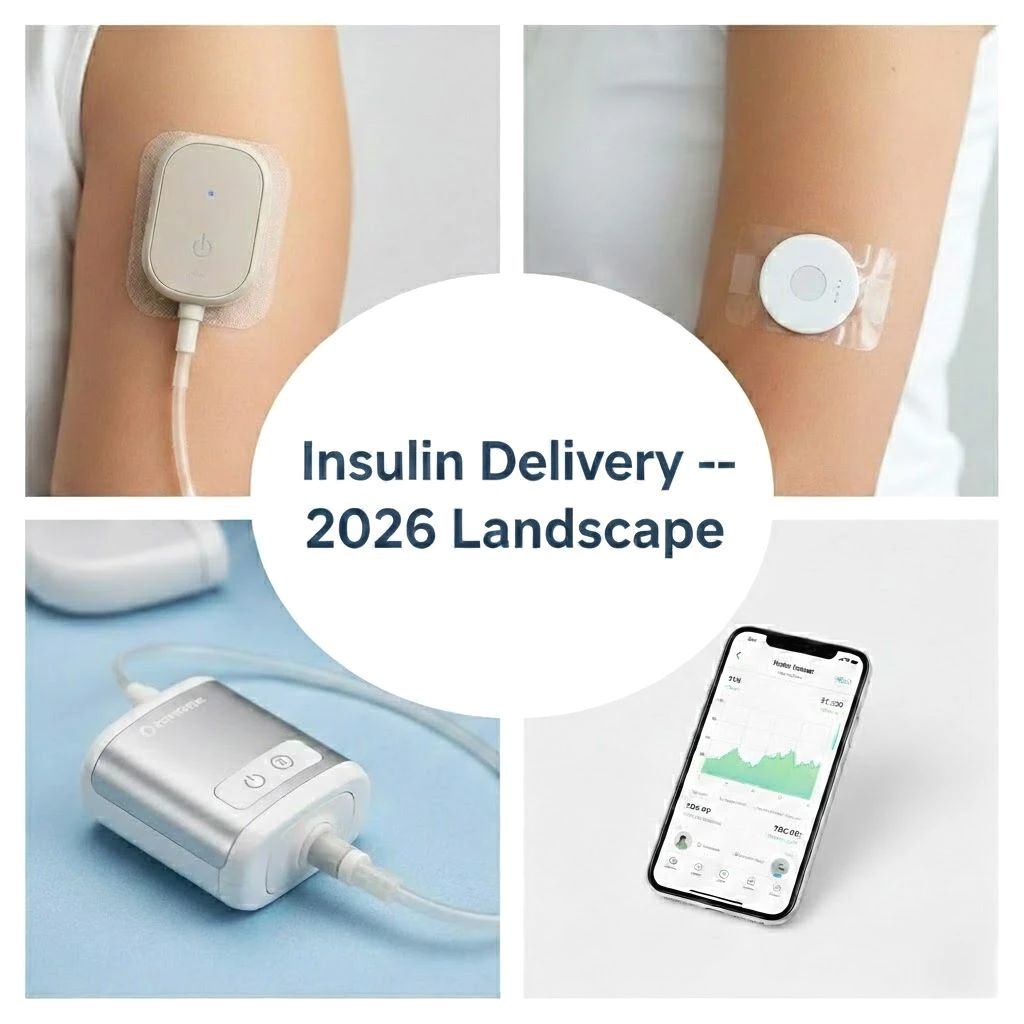
Insulin delivery is no longer just about pumps, it’s becoming an integrated, automated ecosystem.
Today’s leading systems combine three elements: a wearable pump, continuous glucose monitoring, and algorithms that automatically adjust dosing, often called automated insulin delivery (AID) or “artificial pancreas” systems.
Devices such as patch pumps, ultra-miniaturized wearables, and smartphone-controlled systems are rapidly reshaping diabetes care. For example:
🟦 Tubeless patch systems can predict glucose trends and adjust insulin automatically
🟦 Advanced hybrid closed-loop pumps continuously adapt dosing based on sensor data every few minutes
🟦 New ultra-compact pumps are small enough to fit in a coin pocket and be controlled entirely by mobile apps
The direction of travel is clear: less manual decision-making, tighter glucose control, and more discreet, data-driven therapy.
As automation improves and connectivity expands, insulin delivery is evolving from a mechanical device market into a software-defined therapeutic platform, with major implications for outcomes, evidence generation, cybersecurity, and regulation.
The burning question for 2026 is not whether these systems will transform diabetes care, but who will set the standards for safety, usability, interoperability, and long-term outcomes.
hashtag#MedTech hashtag#DiabetesCare hashtag#DigitalHealth hashtag#MedicalDevices hashtag#ArtificialPancreas
While you focus on innovation, we take care of the regulatory path!