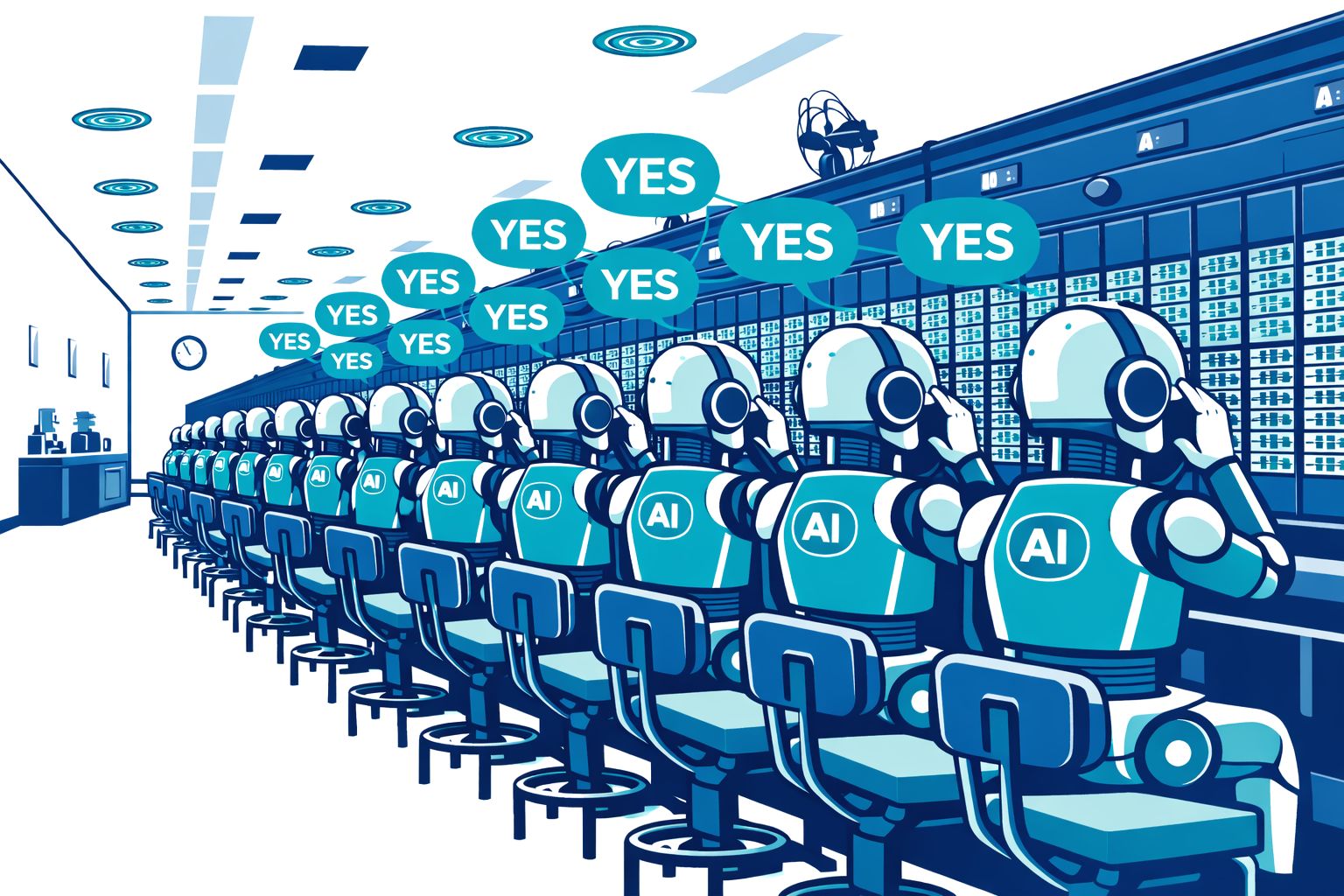
AI doesn’t just hallucinate… it agrees. Why is that a problem?
Large language models are optimized to produce helpful and coherent responses.
When a prompt contains a confident assumption, the model may treat that premise as valid, even if it is slightly incorrect.
Instead of challenging it, the model builds on it, extending the reasoning in a way that sounds logical and authoritative.
When supporting information is missing or uncertain, the model fills the gaps probabilistically. That is where hallucination begins. The system is not deliberately fabricating; it is optimizing for fluent continuation rather than factual verification.
Research from Stanford University and MIT has documented that LLMs may: ⚠️ Generate plausible but incorrect information ⚠️ Fabricate citations ⚠️ Overconfidently present uncertain statements ⚠️ Align strongly with user framing
This is sometimes referred to as “hallucination” or “overalignment.”
The model is not lying, it is predicting the most statistically likely continuation of your prompt.
In corporate settings, this creates a subtle risk:
🚩 LinkedIn posts with fabricated references that look legit 🚩 Website claims that sound authoritative but are inaccurate 🚩 Regulatory summaries that slightly misstate legal nuance 🚩 Invented processes or statistics that pass internal review unnoticed 🚩 Fabricated references to non-existing literature publications
In regulated industries, small inaccuracies can have large consequences.
The real risk is not absurd inventions, but confident agreement with flawed assumptions followed by plausible elaboration, and that is how content can be 95% correct and still create 5% liability.
Bottom line: AI can accelerate drafting, but it cannot replace expert verification.
Where have you seen AI be “apparently right”, and why was that more dangerous than being obviously wrong?
While you focus on innovation, we take care of the regulatory path!